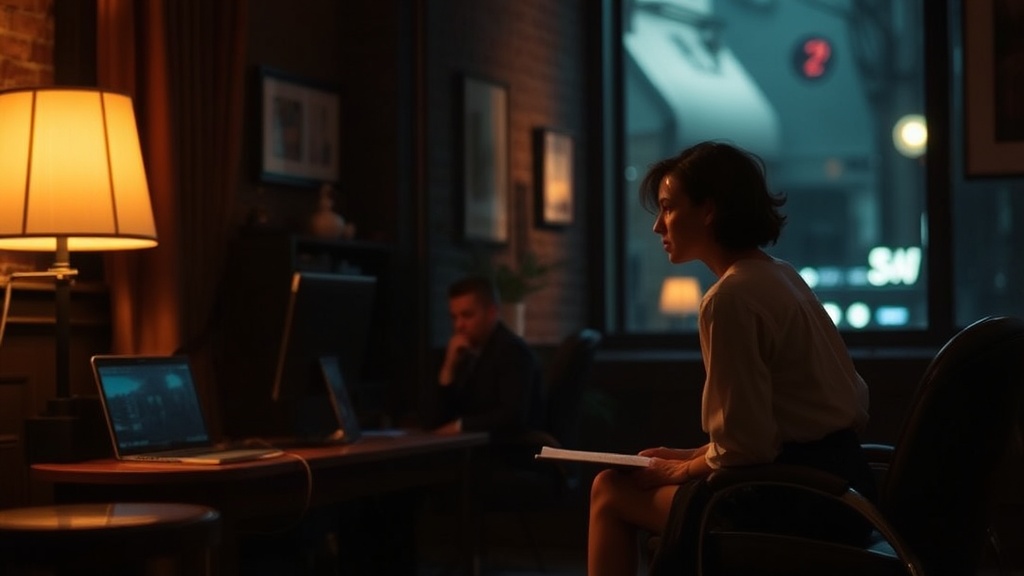
Writing Poetry from a Single Conversation

Have you ever walked away from a conversation and felt a specific line or a strange silence ringing in your ears? This post explains how to isolate a single interaction and transform it into a structured poem. We'll look at how to capture dialogue, extract sensory details, and move from a literal transcript to a piece of art.
A conversation is a goldmine of raw material. It's messy, unpolished, and full of human friction—the exact stuff poetry needs. Instead of trying to write about "love" or "loss" in the abstract, you're going to use a specific exchange to ground those heavy concepts in reality. It's the difference between saying someone is sad and describing the way they tapped a chipped coffee mug against the table while they spoke.
How Do You Turn Dialogue into Poetry?
You turn dialogue into poetry by distilling the essence of the speech rather than transcribing every word. Most people make the mistake of writing a literal script. That's prose. Poetry requires you to select the "pivot points"—the moments where the tone shifts or a specific word carries more weight than the one before it.
Start by identifying the subtext. If two people are arguing about a burnt piece of toast, they aren't actually talking about the bread. They're talking about neglect, or resentment, or perhaps a lack of attention. You need to find that hidden layer. If you can master this, you'll find that using subtext to shape your narrative voice becomes second nature.
Here is a simple workflow for the distillation process:
- The Capture: Note down the exact phrases that stuck with you. Don't worry about the whole conversation; just grab the "hooks."
- The Extraction: Strip away the "ums," "ahs," and filler words. Look for the rhythm of the speech.
- The Translation: Turn the spoken words into imagery. If someone said, "I'm fine," but their voice cracked, don't just write the words—describe the crack.
- The Refinement: Decide if the poem is told through the speaker's voice or an external observer's eyes.
It's often helpful to use a high-quality recording device if the conversation is significant, but even a quick note in a Notes app or a dedicated notebook works. The goal isn't accuracy; it's resonance.
What Are the Best Ways to Capture Sensory Details?
The best way to capture sensory details is to focus on the "micro-movements" that occurred during the speech. While people talk, they aren't just mouth-noises; they are bodies in motion. They fidget. They lean in. They avoid eye contact.
I often find that the most striking poems come from the things that *weren't* said. A long pause can be more descriptive than a paragraph of dialogue. Was it a heavy silence? A nervous silence? A silence that felt like a physical weight in the room?
Consider these three categories of detail during your next conversation:
- Auditory: The pitch of a voice, the sharpness of a consonant, or the way a laugh cuts through a quiet room.
- Physical: The way a hand grips a steering wheel, the tapping of a foot, or the tightness in a jaw.
- Environmental: The hum of a refrigerator in the background or the smell of rain hitting hot asphalt during a walk.
When you focus on these, you move away from the "telling" problem. You aren't telling the reader the character is anxious; you're showing the character's knuckles turning white against a ceramic mug. This is a core technique when turning abstract concepts into concrete imagery.
How Do I Avoid Making the Poem Too Literal?
To avoid being too literal, you must move beyond the transcript and into the metaphorical. A poem that is just a transcript of a conversation is a play script, not a poem. You need to use the conversation as a springboard to reach for something deeper or more universal.
If the conversation was about a broken car, the poem shouldn't just be about the car. It should be about the feeling of being stranded or the frustration of things breaking when you least expect it. Use the physical objects present in the conversation to carry the emotional weight.
| The Literal Element | The Poetic Transformation |
|---|---|
| "He said he was tired." | "His voice had the weight of wet wool." |
| "She looked away and sighed." | "The air left her in a long, thin thread of defeat." |
| "The coffee was cold." | "The porcelain held a bitter, stagnant chill." |
The difference is in the texture. A literal description is a flat surface; a poetic description has grit, heat, and depth. Don't just report the facts. Interpret the feeling behind the fact.
One thing to keep in mind is the pacing. Dialogue in real life is often erratic. It jumps from topic to topic. It's repetitive. You can use this to your advantage. A short, clipped sentence can create tension. A long, rambling sentence can create a sense of exhaustion or even mania.
If you find yourself stuck in a loop of "he said/she said," stop. Look at the room. What is the light doing? Is there a shadow stretching across the table? Bring the external world into the internal struggle. This keeps the poem from becoming a dry, two-dimensional exchange.
Sometimes, the most powerful part of a conversation is the part you missed because you were too busy listening. The glance that went unreturned. The way the person's eyes darted to the door. These are the "ghost" details that give a poem its haunt-ability. They suggest a world that exists outside the frame of the poem, making the piece feel much larger than the single interaction you're describing.
Don't be afraid to be a bit "selfish" with your source material. You aren't writing a biography of the person you spoke to; you are using their voice as an instrument to play a melody of your own. The conversation is the tool, not the subject. If you treat it as a tool, the resulting poem will feel much more intentional and much less like a diary entry.
Steps
- 1
Eavesdrop with Intention
- 2
Isolate the Rhythmic Core
- 3
Contextualize the Fragment