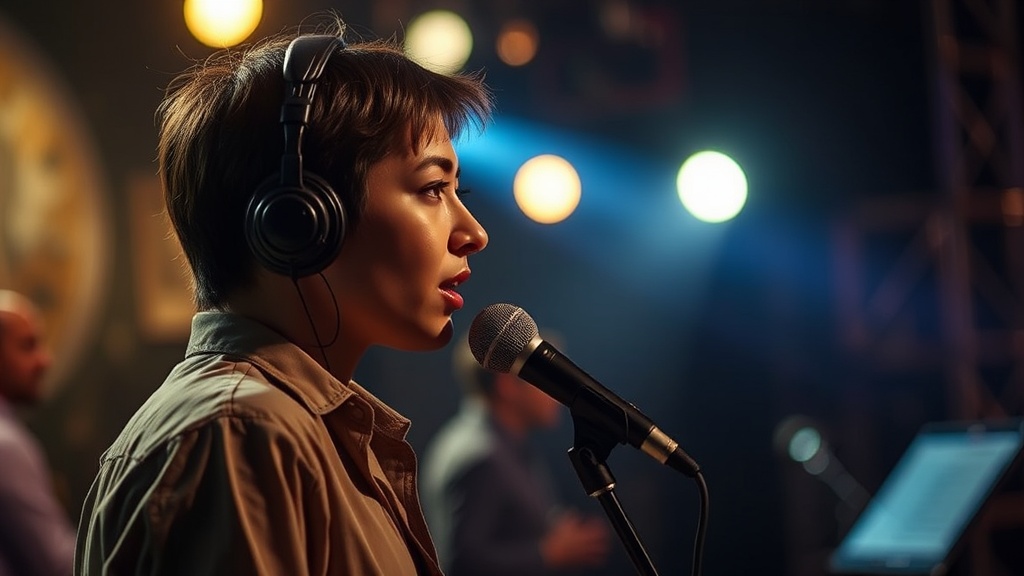
Finding Music in the Mundane Rhythm of Speech

A barista at a busy coffee shop shouts an order, her voice rising and falling in a rhythmic cadence that cuts through the hiss of the steam wand. A customer responds with a short, clipped sentence, a sharp staccato that punctuates the ambient noise of clinking ceramic. This isn't just noise; it's a sequence of natural meter and cadence.
Most writers look for inspiration in grand gestures or epic tragedies, but the real magic often hides in the way people actually talk. We're looking at how to capture the musicality of everyday speech to make your poetry feel alive. Understanding the difference between formal meter and natural prosody is what separates a stiff, artificial poem from one that breathes. It's about the rhythm of the mundane.
When you ignore the way people actually speak, your dialogue and your verse can end up feeling wooden. You've seen it—the "thee" and "thou" of bad fantasy or the overly-polished, rhythmic perfection of amateur lyric poetry that sounds nothing like a human being. To fix this, you have to listen to the gaps, the interruptions, and the weird little pauses that define human connection.
How Do You Identify Rhythm in Natural Speech?
You identify rhythm in natural speech by listening for the stressed and unstressed syllables within a sentence, often ignoring the "correct" poetic meter in favor of the speaker's actual breath patterns. People don't speak in perfect iambic pentameter. They speak in bursts. They use fragments. They trip over their own words.
Think about a conversation between two friends. One might use long, flowing sentences filled with "ands" and "buts"—a technique often called polysyndeton—while the other might use short, punchy one-word answers. This creates a back-and-forth tension. It's a rhythmic dialogue that mimics the actual movement of a relationship.
To practice this, I suggest sitting in a public space—a park in Victoria, a local library, or even a busy cafe—and simply transcribing the "beats" of a conversation without writing down every single word. Don't worry about the meaning. Focus on the tempo. Is the speaker speeding up because they're excited? Are they slowing down because they're hesitant? (That hesitation is where the best poetry lives, by the way.)
If you want to understand the technical side of how language structure affects perception, you might find the linguistic studies on prosody and linguistic rhythm helpful. It explains how pitch, stress, and tempo create meaning beyond the literal definition of words.
The Components of Speech Rhythm
To translate speech into poetry, you need to break it down into its core elements. It's not just about the words; it's about the energy behind them.
- Pitch: The rise and fall of a voice. A high pitch might signal anxiety, while a low, steady pitch suggests authority.
- Tempo: The speed of delivery. Rapid-fire speech can feel frantic; slow speech can feel heavy or contemplative.
- Pauses: The silence between words. A pause can be a breath, a hesitation, or a profound moment of realization.
- Volume: The intensity of the sound. A whisper carries a different weight than a shout, even if the words are identical.
Can You Use Everyday Dialogue to Improve Your Poetry?
Yes, you can use everyday dialogue to improve your poetry by treating spoken fragments as rhythmic blueprints for your stanzas. Instead of forcing a line to fit a strict meter, try to mimic the natural cadence of a person talking about something trivial.
This is a direct way of turning abstract concepts into concrete imagery. Instead of writing a poem about "grief," write about the way a person's voice cracks when they say the word "breakfast" in a quiet kitchen. The specific, broken rhythm of that word carries more weight than any abstract metaphor ever could.
Consider the way a person might order a coffee. It's rarely a poetic sentence. It's usually: "Large latte. Oat milk. Thanks." That's a rhythm of three distinct beats. If you use that in a poem, you're signaling a certain level of urgency or routine that a long, flowing sentence would completely miss.
| Type of Speech | Rhythmic Quality | Poetic Effect |
|---|---|---|
| The Interruption | Broken, jagged, abrupt | Creates tension or shows anxiety |
| The Rambler | Long, flowing, repetitive | Suggests excitement or exhaustion |
| The Minimalist | Short, staccato, clipped | Conveys directness or emotional distance |
| The Hesitant | Frequent pauses, "um/uh" fillers | Shows vulnerability or uncertainty |
When you're working on a piece, don't be afraid to let the rhythm be "ugly." A perfectly metered poem can feel like a machine. A poem that incorporates the stumbling, stumbling rhythm of a real human voice feels like a living thing.
What Are the Best Ways to Practice Listening for Poetry?
The best way to practice is to record small snippets of natural speech—with permission, of course—or to use high-quality audio from a source like a podcast or a radio broadcast to analyze how much the "music" of the voice dictates the mood.
I often find that my best work comes from the "wrong" sounds. A harsh "k" or "t" sound in the middle of a sentence can act like a speed bump for the reader. It forces them to slow down. If you're writing a poem about a calm ocean, you'll use soft sibilance (s sounds). But if you're writing about a person trying to stay calm while they're actually falling apart, you might use those sharp, jagged sounds to show the cracks in their facade.
Here is a quick method to sharpen your ear:
- The Shadowing Technique: Listen to a person speaking (a video, a podcast, or a real person) and try to type exactly what they say, including every "um," "ah," and every awkward pause.
- The Breath Test: Read your own poem aloud. If you find yourself running out of breath or feeling like a sentence is too long for a natural human breath, the rhythm is off.
- The Variable Tempo Drill: Take a single sentence and say it three different ways: once as a joke, once as a secret, and once as an angry command. Notice how the rhythm changes.
This practice is essentially about learning to hear the subtext. The words say one thing, but the rhythm says another. If a character says "I'm fine" with a rapid, high-pitched tempo, the reader knows they are anything but fine. That's the power of the mundane rhythm.
It's easy to get lost in the technicality of it all—the feet, the meters, the scansion. But don't let the rules drown out the actual sound. If you're feeling stuck in a rut, sometimes the best thing to do is to step away from the desk and just listen to the world. The way a child asks a question, the way a tired clerk answers a customer, the way a neighbor calls out to a dog—these are your building blocks.
If you find yourself getting too caught up in the "correctness" of your structure, you might want to look into small ways to break your routine writing habits. It's often a matter of unlearning the desire for perfection to make room for the beauty of the imperfect.